A Guide to Power Management Systems
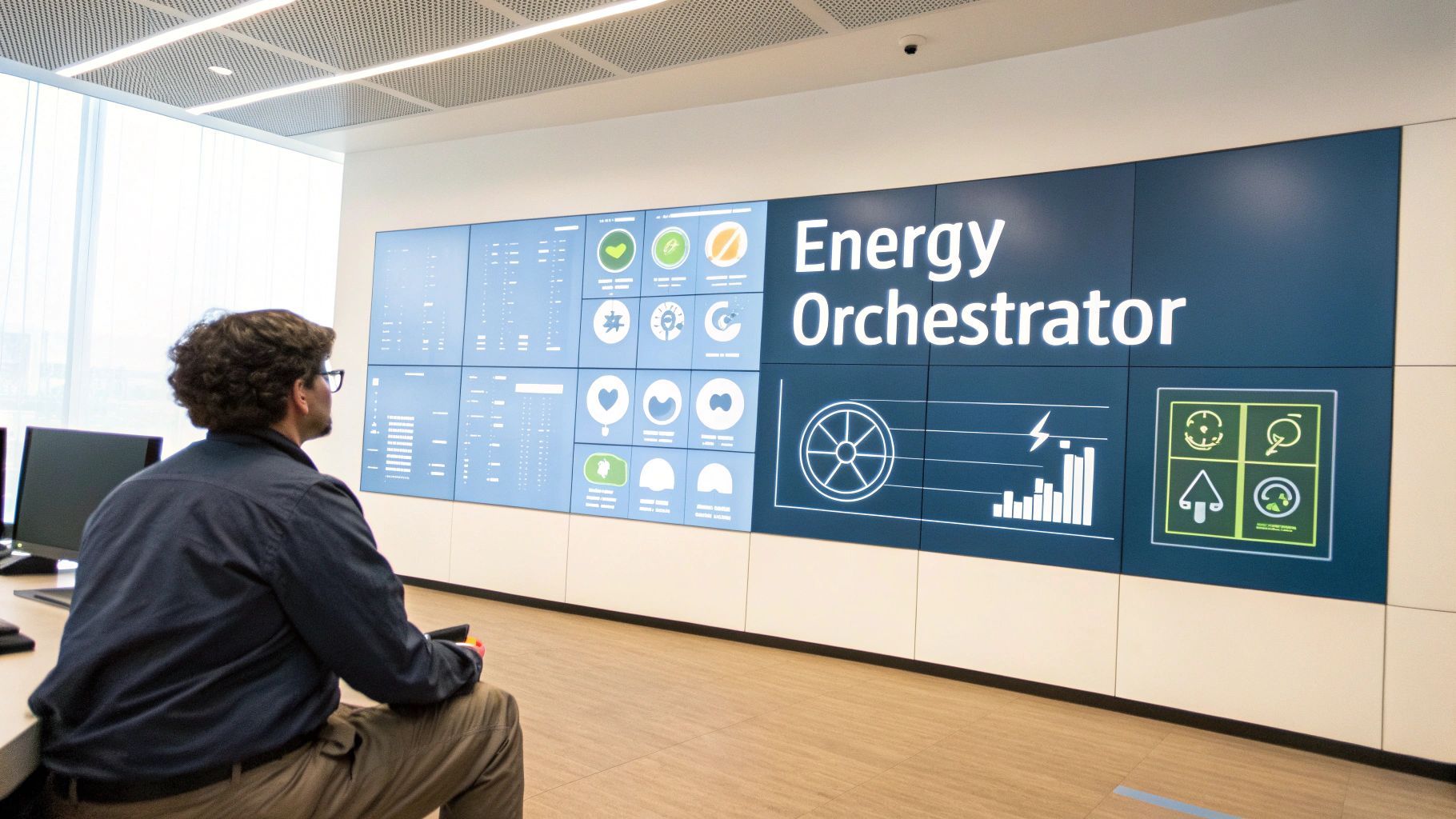
Think of a modern power management system as the conductor of an orchestra. It has to coordinate a whole host of different instruments—solar panels, the grid, grid scale batteries, and power-hungry equipment like rapid EV chargers —to create a perfectly synchronised performance. This digital conductor ensures everything works together to deliver reliable, efficient and cost-effective power, exactly when and where it's needed.
Understanding Modern Power Management Systems
A standard grid connection is a bit like a one-way street; power flows from the big power station directly to your site. That’s it. A modern power management system (PMS) completely redesigns that road network, turning it into a dynamic, multi-lane motorway with on-ramps and off-ramps for energy. It’s not just about taking power anymore; it’s about actively managing, storing and even sending power back out when it makes sense.
This is the key to unlocking the potential of modern energy assets, particularly for EV charging from constrained grid connections. Without this intelligent control, trying to connect a bank of rapid EV chargers to an older grid connection would be a recipe for disaster. You’d either cause major instability or face an eye-watering bill for network upgrades. The PMS is the technology that makes these ambitious projects not just possible but financially smart.
The Core Purpose of a Power Management System
At its heart, a PMS is all about solving one critical problem: balancing energy supply with energy demand. This used to be simple but with the rise of intermittent renewables and fluctuating commercial needs, it’s become a seriously complex juggling act.
Imagine this scenario: your on-site renewables are churning out huge amounts of free electricity at midday but your site is quiet and using very little. Later that evening, a whole fleet of electric vehicles plugs in, demanding a massive surge of power long after the sun has set. A PMS is what bridges that gap.
A power management system moves beyond simple monitoring to become an active decision-maker. It determines the most cost-effective and efficient way to use every kilowatt of energy, whether that means storing it in grid scale batteries, using it immediately or even selling it back to the grid.
A good way to understand its role is to look at its core functions.
Core Functions of a Power Management System
This table breaks down the main jobs a PMS handles, showing how it moves from just watching the dials to actively running the show.
| Function | Description | Key Benefit |
|---|---|---|
| Load Balancing | Intelligently schedules when high-power assets (like rapid EV chargers) can draw energy to avoid exceeding the site's grid connection limit. | Prevents costly grid upgrades and avoids tripping breakers at peak times. |
| Renewable Integration | Captures excess energy from sources like solar and wind and stores it in grid scale batteries for later use, ensuring no free energy goes to waste. | Maximises the financial return on renewable assets and reduces reliance on the grid. |
| Cost Optimisation | Automatically decides whether to use grid power, stored battery energy or on-site generation based on real-time energy prices and tariffs. | Slashes energy bills by always defaulting to the cheapest available power source. |
Each of these functions plays a vital part in creating a smarter, more resilient energy ecosystem for your site.
Enabling the Future of Energy
This kind of intelligent coordination is precisely what makes modern distributed energy infrastructure work. It’s what allows a business to roll out a huge EV charging network without bringing the local grid to its knees. A sophisticated PMS can manage the intricate dance between charging vehicles, pulling from on-site batteries and topping up with solar power, all happening at the same time.
Ultimately, these systems are the unseen engines driving the energy transition. They provide the brains and control needed to manage a world where power flows in multiple directions, creating stability and unlocking brand new economic opportunities for businesses smart enough to get ahead of the curve.
The Evolution of UK Power Management
To really get why advanced power management is so vital today, you have to look at how we got here. The UK’s energy story isn't a straight line; it's a dramatic shift from a predictable, centralised grid running on one main fuel to the messy, decentralised network we have now. That journey explains exactly why we need intelligent systems to keep the lights on.
For most of the 20th century, the UK’s electricity system was pretty simple. Coal was king. It gave us a stable, constant source of power that was easy to manage. Big, central power stations pushed electricity out to homes and businesses in a one-way flow. The grid was built for that kind of simplicity.
But things started to change, slowly at first and then all at once. After the Second World War, electricity use soared as the national grid expanded. The real turning point came in the 1990s with the 'Dash for Gas', which saw natural gas rapidly elbow coal out of the top spot. This was the first major step away from depending on a single fuel and it started to reshape the UK’s energy landscape. The [history of UK energy policy]( https://en.wikipedia.org/wiki/Energy_in the_United_Kingdom) shows just how significant this pivot was.
The Rise of Renewables and New Challenges
The biggest shake-up, though, has been the recent explosion in renewable energy. The UK has become a world leader in offshore wind and solar panels are a common sight. While this is fantastic for cutting carbon emissions, it's thrown a massive spanner in the works for our old grid: intermittency .
A coal or gas power station can be switched on whenever you need it. Renewables don't work like that. The wind doesn’t always blow and the sun doesn't always shine. This creates massive swings in supply that the traditional grid just wasn't designed to cope with.
Suddenly, grid operators were facing a whole new set of headaches:
- Grid Instability: A sudden drop in wind speed or a cloud passing over a solar farm can make the grid's frequency and voltage wobble, risking blackouts.
- Wasted Energy: On a really windy or sunny day, renewables can generate more power than the grid can actually use. That excess energy often has to be thrown away—a process called curtailment.
- Infrastructure Strain: The old network of cables and substations is creaking under the strain of power flowing in from thousands of different directions, not just from a few big power plants.
The EV Charging Revolution Adds Another Layer of Complexity
On top of all this, we've got the electric vehicle revolution. The demand from rapid EV charging is huge and highly concentrated. A single depot charging a fleet of electric lorries can draw as much power overnight as a small town, putting incredible pressure on the local grid connection.
The old model of simply reinforcing the grid by laying more copper is no longer an option. It’s too slow, far too expensive and it doesn't fix the real problem: balancing a dynamic, decentralised energy network.
This is the point where sophisticated power management systems went from being a "nice-to-have" to an absolute necessity. The UK's energy system turned from a simple monologue into a complex conversation between countless different players. We needed a new kind of conductor to orchestrate the whole thing—to manage the interplay between grid-scale batteries, on-site solar and high-demand assets like EV chargers, especially when working with a limited grid connection. This history set the stage for the intelligent, responsive energy management we have today.
Integrating Renewables With EV Charging
Let's be honest: combining the stop-start nature of renewable energy with the sudden, massive power demands of EV charging is a tricky puzzle. A modern power management system is the piece that makes it all fit together. It’s the brain of the operation, turning the chaos of unpredictable energy flows into a smart, efficient system.
Think about it in a real-world scenario. Imagine a depot full of rapid EV chargers trying to power up a fleet of lorries, all pulling from a grid connection that was never designed for that kind of load. Without a PMS, you’d instantly blow the local fuses, causing chaos or forcing a multi-million-pound grid upgrade. The PMS is what stands in the middle, creating a vital buffer.
Managing Demand With On-Site Generation and Storage
The smartest way to handle this is by using your own on-site assets—like solar panels and a Battery Energy Storage System (BESS)—to shield the grid from those huge demand spikes. The PMS is the conductor, directing the flow of energy based on a clear set of priorities.
When your solar panels are generating more electricity than the site needs, that energy isn't wasted. The PMS intelligently diverts the surplus power to charge up a grid-scale battery, essentially bottling sunshine for later. This stored energy then becomes your first choice when demand kicks in.
For example, when a fleet of electric lorries rolls back to the depot in the evening, the PMS gets to work orchestrating the charging sequence. It can:
- Prioritise Stored Energy: First, it will tap into the energy saved in the on-site battery, which is almost always the cheapest power you have.
- Intelligently Adjust Charging: If grid demand is high (and expensive), it can slow down the charging rate on some vehicles, then ramp it up later when demand—and costs—drop.
- Maximise Renewables: It makes sure every last kilowatt from your on-site solar or wind is used right there before you ever have to pull expensive power from the grid.
The UK's entire energy landscape is shifting away from fossil fuels towards renewables, as you can see below.
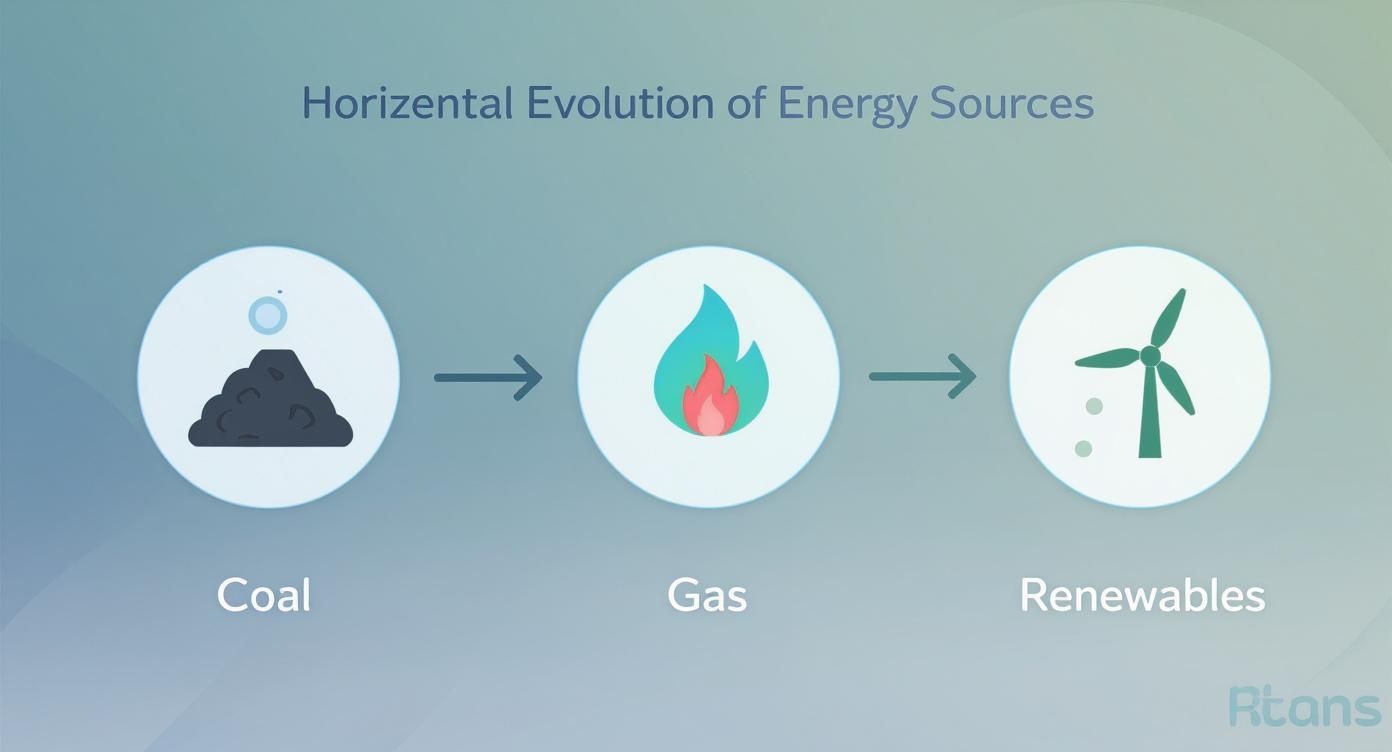
This fundamental change makes systems that can expertly manage the variable output of wind and solar more critical than ever.
The Engineering Behind Grid-Scale Integration
Actually connecting large-scale renewables and grid-scale batteries to the national network is a highly specialised field. You need serious engineering expertise to ensure these assets don't just generate power but actively help stabilise the grid. This is where specialist firms have become essential. One of the UK's leading high-voltage engineering firms has connected over 6.1 gigawatts (GW) of renewable capacity since 2000, which includes around 30% of all UK onshore wind farms . This kind of work highlights the technical grit required to make intermittent renewables and new storage technologies a reliable part of our national power supply.
A PMS is the intelligence that makes these physical connections truly valuable. It ensures a large BESS doesn’t just sit there waiting but actively participates in the energy market—providing power during peak demand or absorbing excess energy to keep the grid stable.
By managing the charge and discharge cycles of batteries in sync with both on-site needs and wider grid conditions, a PMS turns a simple energy storage unit into a dynamic, revenue-generating asset.
This capability is non-negotiable for any business looking to roll out rapid EV charging. A PMS allows you to offer consistent, high-speed charging without being held hostage by grid availability or volatile energy prices. Understanding how to properly connect these distributed assets is crucial and you can learn more about integrating renewable energy with advanced storage solutions in our related guide.
By intelligently blending on-site renewables, battery storage and controlled EV charging, a power management system effectively creates a resilient and cost-effective microgrid right where you need it.
The Business Case for Advanced Power Management
Moving beyond the technical details, the real question for any business leader is simple: what’s the actual value? An advanced power management system isn't just an operational tool; it's a strategic investment with a clear and compelling financial upside. The business case really boils down to three core pillars: slashing costs, creating new revenue and avoiding enormous capital expenditure.
These systems deliver a powerful return by fundamentally changing how a business consumes and interacts with energy. Instead of being a passive consumer paying whatever the supplier demands, a business with a PMS becomes an active, intelligent participant in the energy market. That shift alone opens up significant financial advantages.
Slashing Operational Costs
The most immediate benefit of a power management system is a dramatic reduction in electricity bills. By optimising when and where you draw power from, the system ensures you always use the cheapest energy available.
This happens in a few key ways:
- Peak Shaving: The system uses stored battery energy to power your site during expensive peak demand periods, cleverly avoiding high tariffs.
- Renewable Self-Consumption: It ensures that every kilowatt-hour generated by on-site solar is used or stored, minimising reliance on costly grid power.
- Tariff Arbitrage: It can automatically charge batteries when grid electricity is cheap (like overnight) and discharge them when it's expensive, taking full advantage of price fluctuations.
These automated actions can lead to substantial savings, turning energy from an unpredictable overhead into a managed, optimised expense. You can discover more about maximising profitability with an energy management system and see how these strategies translate into real-world returns.
Creating New Revenue Streams
A PMS doesn’t just save money; it can also make money. By connecting your energy assets to the grid, the system allows you to participate in valuable grid services schemes. These are programmes run by the National Grid to help maintain stability and they pay businesses to be flexible with their energy use.
For example, through demand response services, you can earn revenue by agreeing to reduce your grid consumption for short periods when overall demand is high. Your PMS handles this automatically by switching over to your battery storage, so your operations continue uninterrupted while you generate income. This turns your energy infrastructure into a proactive, revenue-generating asset.
An advanced power management system transforms a company's energy assets from a simple cost centre into a dynamic part of the business that contributes directly to the bottom line and enhances operational resilience.
Avoiding Costly Grid Connection Upgrades
Perhaps the most significant financial driver is cost avoidance. For any business looking to install rapid EV charging or expand energy-intensive operations, the cost of upgrading a constrained grid connection can be astronomical, often running into the millions.
A PMS offers a far more cost-effective alternative. By intelligently managing the load with on-site batteries and renewables, the system allows you to install significantly more EV chargers or equipment on your existing connection. This avoids the huge expense and lengthy delays associated with grid reinforcement, making ambitious decarbonisation projects financially viable. This improved energy stability is also a cornerstone of effective business continuity planning , safeguarding operations against grid-related disruptions.
The market trend strongly supports this investment. The UK energy management systems market is growing rapidly, projected to nearly double from USD 2.88 billion in 2024 to USD 5.6 billion by 2030. This growth is driven by industrial and commercial users seeking precisely these benefits of efficiency, resilience and decarbonisation. This data confirms that adopting advanced power management systems is not just a technical upgrade but a sound financial strategy for the future.
Key Components of a Modern Power System
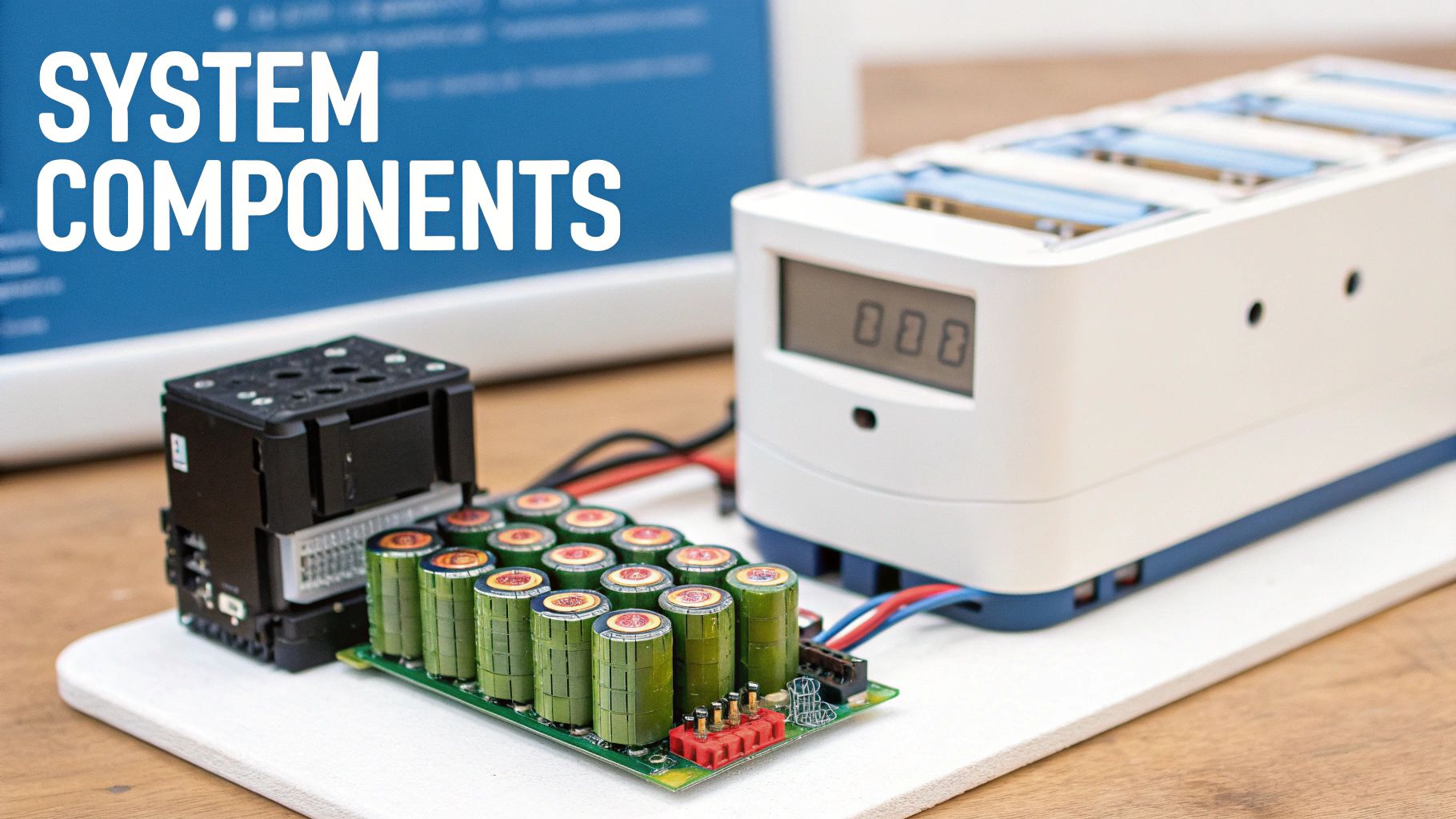
To really get what a power management system does, it helps to look under the bonnet. These systems aren't just a single piece of kit but a finely tuned combination of physical hardware and intelligent software. Each element has a distinct job but they all work together to monitor, control and get the most out of every kilowatt flowing through a site.
Think of the hardware as the system's physical nervous system. It includes everything from the smart meters that gather data to the controllers and switches that carry out commands. The software, on the other hand, is the brain. It takes all that information from the hardware, spots patterns and makes strategic decisions to keep the whole energy ecosystem running like clockwork.
The Hardware Layer: The Eyes and Ears
The hardware is the part of the system that physically interacts with your energy assets—your solar panels, batteries and EV chargers. It’s the sensory network, constantly collecting data and acting on instructions. Without solid, reliable hardware, the software would be completely blind and powerless.
Key hardware components usually include:
- Smart Meters and Sensors: These are fitted to your grid connection, solar arrays, batteries and chargers. They are the eyes and ears, giving you precise, real-time data on exactly how much energy is being used, generated and stored.
- Controllers and Actuators: These are the hands of the operation. Following orders from the software, they physically manage where the energy goes. For instance, a controller might tell a battery to start discharging during a peak price period or instruct a bank of EV chargers to scale back their power draw.
- Battery Energy Storage Systems (BESS): This is a massive piece of the hardware puzzle, acting as your on-site energy reservoir. The quality of the battery technology is absolutely paramount. To get a feel for the engineering that goes into it, it’s worth understanding what makes modern energy storage so advanced.
Modern systems go beyond the basics, often integrating smart technologies. For example, knowing how to use IoT sensors for predictive maintenance in MEP systems can flag potential failures before they happen, adding another layer of resilience.
The Software Layer: The Decision-Making Brain
If hardware provides the raw data, software provides the intelligence. This is where the numbers are crunched and turned into smart, automated actions. It’s the central hub that gives you a complete picture of your energy landscape and runs the whole control strategy.
The software is what turns a simple collection of energy assets into a cohesive, intelligent system. It moves beyond just monitoring to active, predictive control, managing resources to hit specific goals like cutting costs or carbon emissions.
To get a sense of how hardware and software rely on each other, it helps to see their roles side-by-side.
Hardware vs Software in Power Management Systems
| Component Type | Examples | Primary Function |
|---|---|---|
| Hardware | Smart meters, sensors, controllers, BESS, inverters, circuit breakers. | Physical interaction. Gathers real-time data from energy assets and executes physical commands (e.g., open/close a switch). |
| Software | Analytics dashboards, AI algorithms, control logic, reporting tools. | Intelligence and control. Analyses data, makes predictive decisions, automates actions and provides user visibility. |
This interplay is what makes the system so powerful.
The software platform brings everything together with powerful features:
- Analytics Dashboards: These give you a crystal-clear, visual overview of your entire energy setup. You can see exactly how much solar is being generated, where it’s being sent and how your EV fleet is charging—all in one place.
- AI-Powered Algorithms: This is the real magic. These algorithms look at historical data, weather forecasts and live energy prices to make smart predictions. They figure out the best time to charge your batteries from the grid or when to sell stored energy back for a profit.
Let’s put it into a real-world context. Imagine a logistics depot with its own solar panels, a BESS and an electric fleet. The sensors report that the sun is blazing and the battery is fully charged. The software, seeing that wholesale energy prices are spiking, tells the controller to start exporting stored power to the grid, earning the business extra revenue.
This seamless, instant conversation between hardware and software is the very essence of a modern power management system.
Implementing Your Power Management Strategy
Bringing a sophisticated power management system to life is a big step but it doesn’t have to be a leap into the unknown. With a clear roadmap, your organisation can get from an initial idea to a fully operational system that delivers real, tangible returns. The journey starts not with the technology but with a deep dive into your own energy landscape.
This process kicks off with a thorough energy audit . The goal here is to paint a detailed picture of how you use power right now—pinpointing exactly when and where your site hits its peak consumption. This initial analysis is absolutely crucial for spotting the biggest opportunities for savings and efficiency gains.
Once you have that data in hand, you can start setting clear, measurable goals for the project. Are you mainly trying to cut your reliance on the grid? Or is the big driver the need to install a new fleet of rapid EV chargers on a connection that’s already stretched thin? Nailing down these objectives upfront will guide every decision you make from here on out.
Building Your Project Framework
With a solid grasp of your energy use and project goals, the next stage is all about planning the technical and commercial details. This is where you translate your objectives into a concrete, actionable plan that potential technology partners can actually respond to.
Choosing the right partners is a critical step. You'll want to look for suppliers who can prove they have a deep understanding of integrating different assets, from on-site renewables and grid-scale batteries to high-demand EV charging. They should be able to offer more than just hardware and software; you need engineering expertise to design a system that’s truly built for your specific needs.
To navigate the procurement process effectively, you need to be specific about what you’re looking for. Key things to think about should include:
- System Scalability: Can the system grow with you? If you need to add more EV chargers or expand your battery storage down the line, will it be able to handle it?
- Interoperability: Does the software play nicely with a range of hardware or does it lock you into one manufacturer’s ecosystem?
- Support and Maintenance: What kind of ongoing support is on the table to make sure the system keeps performing at its best?
Measuring Success with Key Performance Indicators
To justify the investment and keep track of your return, it’s vital to define Key Performance Indicators (KPIs) right from the start. These metrics will give you hard evidence of the system’s impact on your operations and your bottom line. A well-designed power management system should deliver improvements you can actually measure.
Your KPIs should be a direct reflection of your initial project goals. They turn abstract aims like ‘becoming more sustainable’ into cold, hard data, proving the real-world value of your power management strategy.
Effective KPIs for a power management project often include:
- Increased Renewable Self-Consumption: This measures the percentage of energy you generate on-site that you either use directly or store, rather than exporting it back to the grid for a minimal return.
- Peak Demand Reduction: This tracks the drop in your site's maximum power draw from the grid, which translates directly into lower demand charges on your electricity bill.
- Total Cost of Energy Savings: The ultimate metric. This calculates the total reduction in what you spend on energy compared to your baseline before the system was ever installed.
By following this structured approach—from audit and goal-setting all the way to KPI tracking—your organisation can confidently start its journey towards a more resilient, cost-effective and sustainable energy future.
Frequently Asked Questions
When you start digging into advanced power management, a lot of questions come up. We get it. Here are some straightforward answers to the things we’re asked most often, especially when it comes to EV charging and bringing renewables into the mix.
Can a PMS Really Let Me Avoid a Grid Upgrade?
In many situations, yes, absolutely. By smartly juggling energy from your own sources—like solar panels and battery storage—a power management system can dramatically lower the peak demand you pull from the grid.
This is a game-changer. It means businesses can install power-hungry kit like rapid EV chargers on a grid connection that’s already stretched, without having to go through a costly and painfully slow upgrade process. The system essentially creates more power capacity on-site without touching the grid connection itself.
How Does a PMS Help With Mobile EV Charging?
Mobile EV charging units, the kind you see at events or used for emergency support, are completely reliant on their onboard batteries. A good PMS makes sure these units are charged up in the smartest, most cost-effective way.
For instance, it can schedule their top-ups back at the depot during the dead of night when electricity is cheap. Or it can prioritise charging them with any spare solar energy you’re generating. The end result is a fleet of mobile chargers, always ready to go, powered up at the lowest possible cost.
What’s the Difference Between a PMS and a BESS?
This one trips a lot of people up but it’s quite simple. A Battery Energy Storage System (BESS) is the hardware—the actual battery units. A Power Management System (PMS) is the intelligent software that controls the BESS and everything else connected to it.
Think of it like this: the BESS is a powerful engine but the PMS is the skilled driver. The engine has all the horsepower but it’s the driver who decides when to accelerate, when to ease off and how to reach the destination using the least amount of fuel. A BESS is a vital piece of the puzzle but its true value is only unlocked by a smart PMS telling it what to do.
Can a PMS Work Without Solar Panels or Wind Turbines?
Definitely. While you get the biggest bang for your buck by pairing a PMS with on-site renewables, it still delivers huge value on its own.
Even if you only have a grid connection and a battery, a PMS can get to work on peak shaving and tariff arbitrage . That’s just a technical way of saying it stores cheap, off-peak grid energy in the battery to use during expensive peak times. For businesses with big energy appetites, like those running large EV charging hubs or distributed energy networks, that simple act can slash electricity bills.
At ZPN Energy , we don’t just supply components; we design and build complete power management systems from the ground up. Our patented technology is built to integrate battery storage, renewables and EV charging to solve tough energy problems, giving you reliable power and more charging capacity even from a weak grid connection.
Find out more about our advanced energy solutions at https://www.zpnenergy.com.