Inverter drive systems: Powering Rapid EV Charging and Grid Stability
At the heart of the UK's green energy transition, there is a technology working silently behind the scenes: the inverter drive system . Think of it as a sophisticated energy translator. It takes the Direct Current (DC) power from sources like solar panels and batteries and converts it into the Alternating Current (AC) our grid and EVs actually use. This technology is fundamental to managing how electricity flows, making it essential for everything from rapid EV charging to balancing the national grid.
The Hidden Engine of Modern Energy
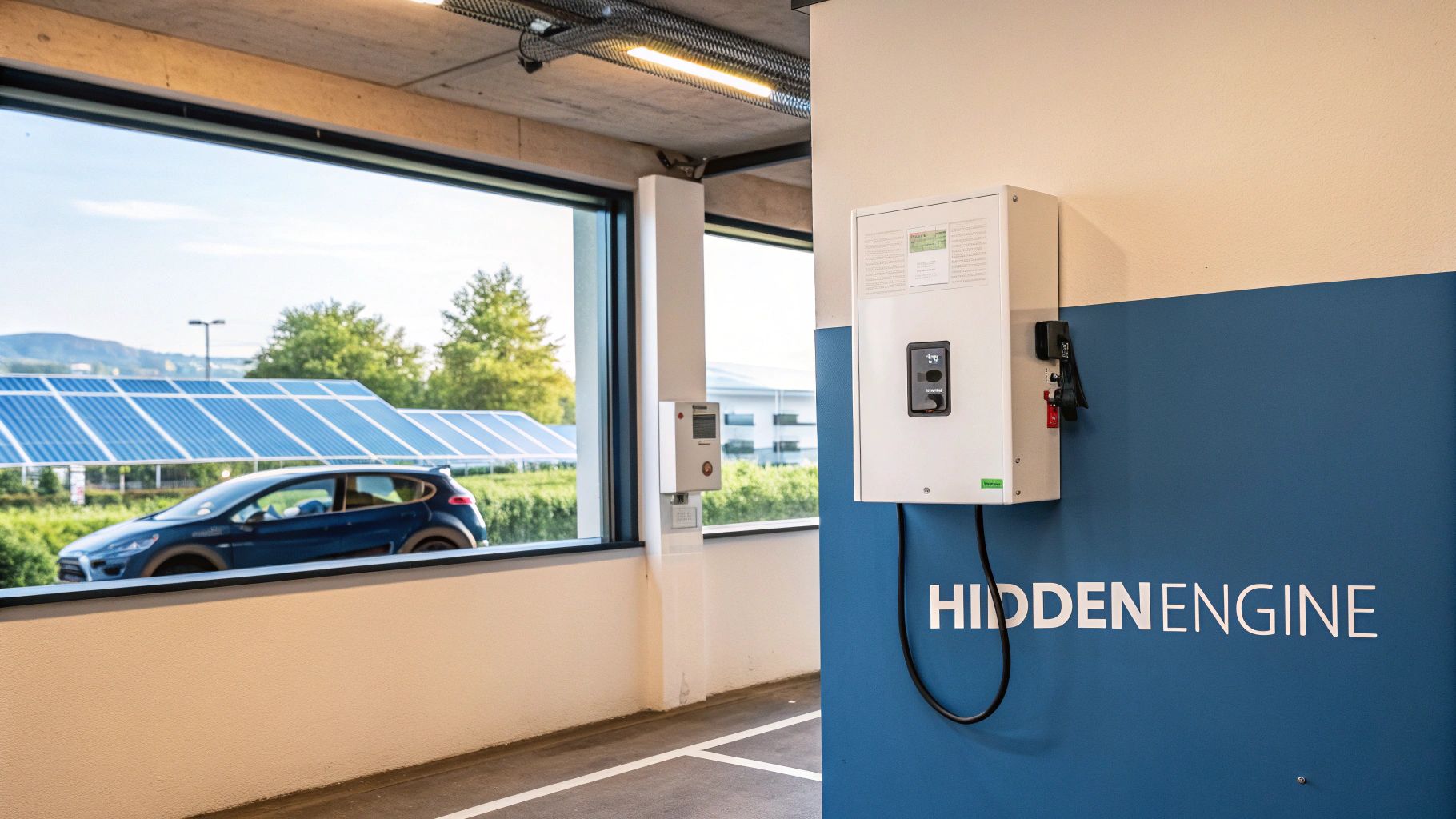
Inverter drive systems are the unsung heroes of our evolving energy infrastructure. They provide the critical bridge between modern energy sources—which often produce or store power as DC—and the AC network that powers our homes, businesses and vehicles. Without them, integrating renewables or deploying advanced grid-scale batteries would be impossible.
But these systems are far more than simple converters. They are intelligent power managers, precisely controlling the voltage and frequency of electricity. This level of control is absolutely vital for the growing number of applications that are defining our energy future.
Key Roles in the Energy Transition
The sheer versatility of inverter drive systems means they are solving some of the UK's most pressing energy challenges. Their impact is already clear across several key areas:
- Enabling Rapid and Mobile EV Charging: They make it possible to deliver high-power charging even where the local grid connection is weak, intelligently blending power from multiple sources to get the job done.
- Integrating Renewables with Grid-Scale Batteries: Inverter drives manage the flow of energy between on-site generation like solar panels and large-scale batteries, making sure no clean energy ever goes to waste.
- Supporting Constrained Grid Connections: They act as a buffer, drawing power from batteries during peak demand to stop local infrastructure from being overloaded and avoiding costly, time-consuming grid upgrades.
- Creating Distributed Energy Hubs: By combining on-site renewables, EV charging and batteries, they can turn commercial and industrial sites into self-sufficient energy hubs that not only support the grid but can also generate new revenue streams.
In essence, an inverter drive system is the crucial control point where clean power generation, energy storage and consumer demand all meet. Its ability to manage these interactions dynamically is what makes a decentralised, resilient energy grid a reality.
As the 'hidden engine' for these applications, their efficiency depends on the performance of every single component in the chain. For instance, in solar-powered systems, the overall output is directly linked to factors like maintaining solar panels for peak performance. This ensures the inverter receives the maximum possible DC input to convert in the first place, highlighting how the entire ecosystem—from generation to conversion—must be optimised. In the sections that follow, we'll explore the specific technologies that make this sophisticated energy management possible.
Understanding Core Inverter Technologies
To really get a feel for their impact, it helps to understand how different inverter drive systems actually work. At its core, an inverter’s job is simple: turn DC power into AC power. But the way it does this has huge implications for efficiency, control and what it can be used for.
This is where the different technologies come in, each one built to solve different problems.
The most widespread technique is Pulse Width Modulation (PWM) . Think of it like trying to dim a light bulb with just a standard on/off switch. You cannot turn it halfway on but you can flick it on and off extremely fast. The longer you leave it 'on' compared to 'off' in each little burst, the brighter the light appears to be.
A PWM inverter does something very similar. It takes a steady DC voltage and switches it on and off thousands of times a second. By carefully controlling the width of these 'on' pulses, the inverter cleverly builds a smooth, clean AC sine wave – exactly what’s needed to power AC equipment safely and sync up with the national grid.
The Power of Two-Way Flow
While PWM is the foundation, today's energy challenges demand much more. This is where bidirectional inverters step in and change the game. A standard inverter is a one-way street, pushing power from DC to AC. A bidirectional inverter, however, is a two-way superhighway, able to switch between DC-to-AC and AC-to-DC conversion on the fly.
This two-way capability is what unlocks the true potential of battery energy storage and sophisticated EV charging. It allows a grid-scale battery to both pull power from the grid to charge itself (AC to DC) and push power back out to support it (DC to AC). For electric vehicles, it’s the technology that enables not just charging, but the future of Vehicle-to-Grid (V2G) , where an EV’s battery could one day power your home or help stabilise the grid during peak demand.
Bidirectional inverters transform energy storage from a passive reservoir into an active, dynamic asset. They are the technological core that allows batteries and EVs to participate in the energy market, respond to grid needs and create a more flexible, resilient power network.
Choosing the Right Tool for the Job
Different applications put unique demands on inverter drive systems, so there is no single solution that fits all scenarios. The choice of technology really comes down to what the project needs to achieve, whether it is a rapid EV charging hub or a massive grid-scale battery facility.
The table below lays out the main inverter types relevant to the energy challenges we face today.
Comparing Inverter Drive System Topologies
The choice of inverter technology is a critical design decision, directly impacting project performance, cost and its ability to solve specific energy challenges in the UK, from constrained grid connections to maximising renewable energy use. This table compares the main options.
| Inverter Type | Primary Application | Typical Efficiency | Control Complexity | Best For |
|---|---|---|---|---|
| PWM Inverter | Standard motor control, solar PV systems, unidirectional EV charging. | 95-98% | Low to Moderate | Cost-effective solutions where power only needs to flow in one direction. |
| Bidirectional Inverter | Battery energy storage systems (BESS), V2G EV charging, mobile EV charging. | Up to 99% | High | Dynamic environments requiring both charging and discharging, such as grid support and EV charging from constrained connections. |
| Multilevel Inverter | Grid-scale battery storage, large renewable energy farms, high-power industrial drives. | Over 99% | Very High | High-voltage applications where supreme power quality and minimal harmonic distortion are critical. |
Ultimately, the intense, high-power bursts needed for rapid EV charging benefit hugely from the fine-tuned control of bidirectional inverters, especially when backed by battery storage. In contrast, the sustained, high-volume energy cycling of grid-scale batteries demands the exceptional efficiency and clean power offered by more advanced multilevel inverter designs.
Getting these distinctions right is fundamental to engineering energy solutions that are not just effective but also economically viable.
Solving EV Charging and Battery Storage Challenges
The theory behind inverter technology really comes to life when you see it tackling some of the UK’s biggest energy hurdles. Think of inverter drive systems as the central nervous system for modern EV charging and battery storage. They solve the practical, on-the-ground problems that would otherwise stall the clean energy transition, especially when it comes to constrained grid connections and integrating renewables.
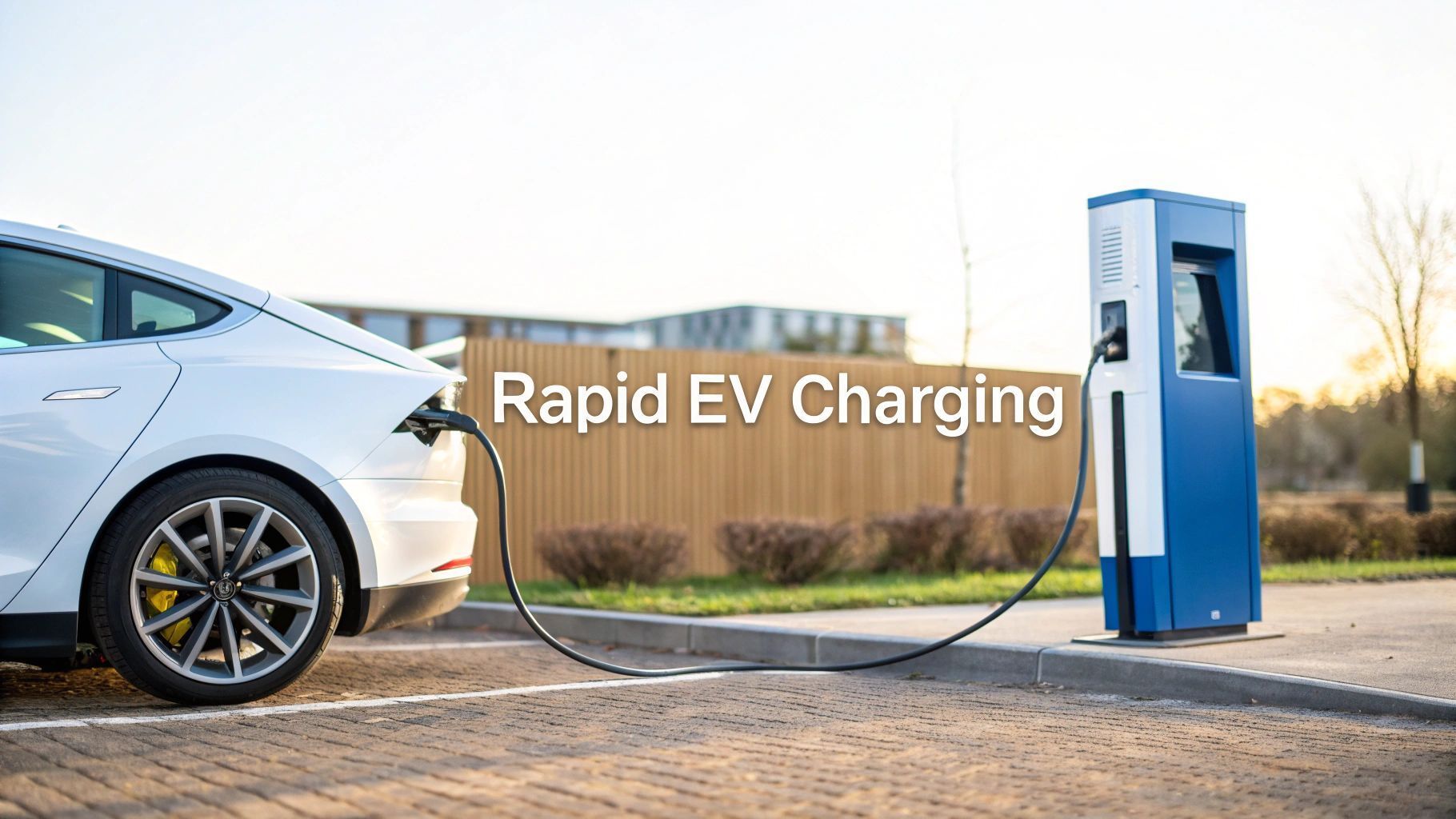
Take the challenge of deploying rapid EV charging . A single rapid charger can pull over 150 kW of power—a demand that many local grid connections simply cannot handle without costly and time-consuming upgrades. This is exactly where smart inverter drives, paired with battery storage, step in to create an elegant solution.
The Inverter as an Energy Arbitrator
Picture a typical commercial site, maybe a logistics depot or a retail park, looking to install a fleet of EV chargers. The grid connection is constrained but there is a huge roof perfect for solar panels. An advanced bidirectional inverter drive system becomes the intelligent hub of this entire distributed energy operation.
During the day, when the sun is out and site energy demand is low, the inverter channels the DC power from the solar panels to charge up a large on-site battery. If the battery is full, any extra solar energy can power site operations or even be sold back to the grid, creating a new revenue stream.
Then, an EV plugs in. This is where the inverter acts as an energy arbitrator, instantly assessing the situation:
- Grid Capacity: How much power can we safely draw from the grid without tripping the main breaker?
- Battery State of Charge: How much energy do we have stored and ready to deploy?
- Solar Generation: What are the solar panels producing in real-time that we can use directly?
Based on these inputs, the inverter seamlessly blends power from all three sources to give the vehicle a rapid charge. It might sip a little from the grid, draw a huge chunk from the battery and top it all up with whatever the solar panels are generating at that moment. This approach protects the constrained grid connection while making sure the driver gets the fast charge they expect.
Enabling True Energy Independence
This dynamic management creates a self-sufficient, resilient distributed energy resource right on site. The location is no longer just a passive electricity consumer; it is an active participant in the energy market. This model is also the key to making mobile EV charging a reality, allowing temporary charging stations to be deployed anywhere without a grid connection, running entirely on an integrated battery and a smart inverter.
This kind of intelligent coordination is vital for the growth of the UK's distributed energy infrastructure. By managing the flow of power between renewables, storage and EV fleets, these systems are turning ordinary commercial sites into powerful hubs for the energy transition.
The Crucial Role in Battery Management
Beyond just charging cars, inverter drive systems are fundamental to the safety and longevity of Battery Energy Storage Systems (BESS). Their job is far more than just converting power; they actively manage the battery’s health. The inverter controls charge and discharge rates, monitors temperature constantly and ensures the battery operates well within its safe limits.
An advanced inverter acts as a guardian for the grid-scale battery system. It prevents overcharging, manages thermal stress and maximises the operational lifespan of the battery asset—which is often the most expensive component of the entire installation.
A critical part of this protective role is mitigating risk. A huge concern in the world of battery storage is understanding thermal runaway in lithium-ion batteries , a major safety issue. Sophisticated inverter control strategies are the first line of defence against such events. These intelligent systems are absolutely central to making large-scale energy storage both safe and commercially viable.
By combining precise control with smart energy management, inverter drive systems are making the widespread deployment of large-scale EV charging and battery storage a practical reality.
Future-Proofing the Grid with Advanced Inverter Functions
Today's inverter drive systems are doing a lot more than simply converting DC to AC power. They have become active, intelligent players in strengthening the national grid. As the UK's energy mix leans more heavily on intermittent renewables like wind and solar, keeping the grid stable is a monumental challenge. Advanced inverters are stepping up, providing the sophisticated functions we need to maintain that balance and build a more resilient, distributed energy network.
Instead of just passively following the grid's lead, the best systems are now capable of forming it.
Introducing Grid-Forming Inverters
Historically, our power grid has relied on the sheer rotating mass of turbines in massive power stations to create a stable voltage and frequency. This physical inertia is a natural shock absorber, smoothing out the constant ebbs and flows of supply and demand. But as we decommission these old plants, we lose that built-in stability.
This is where grid-forming inverters come in. Unlike standard grid-following inverters, which just sync up with the existing grid signal, grid-forming inverters can generate their own stable voltage and frequency right from scratch. In essence, they mimic the behaviour of a traditional power station but use smart power electronics and energy stored in grid-scale batteries.
Think of the national grid as a large ship on a choppy sea. The enormous turbines of old power stations act like the ship's heavy ballast, keeping it steady through the waves. Grid-forming inverters are like a modern, digital ballast system, using stored energy to instantly counteract disturbances and keep the ship perfectly upright, no matter how rough the sea gets.
This ability is absolutely critical for building robust, independent microgrids and for keeping the national grid steady as renewable generation fluctuates throughout the day.
The diagram below illustrates how inverter drive systems manage the flow of energy between renewables, storage and EV charging—a core principle behind achieving grid stability.
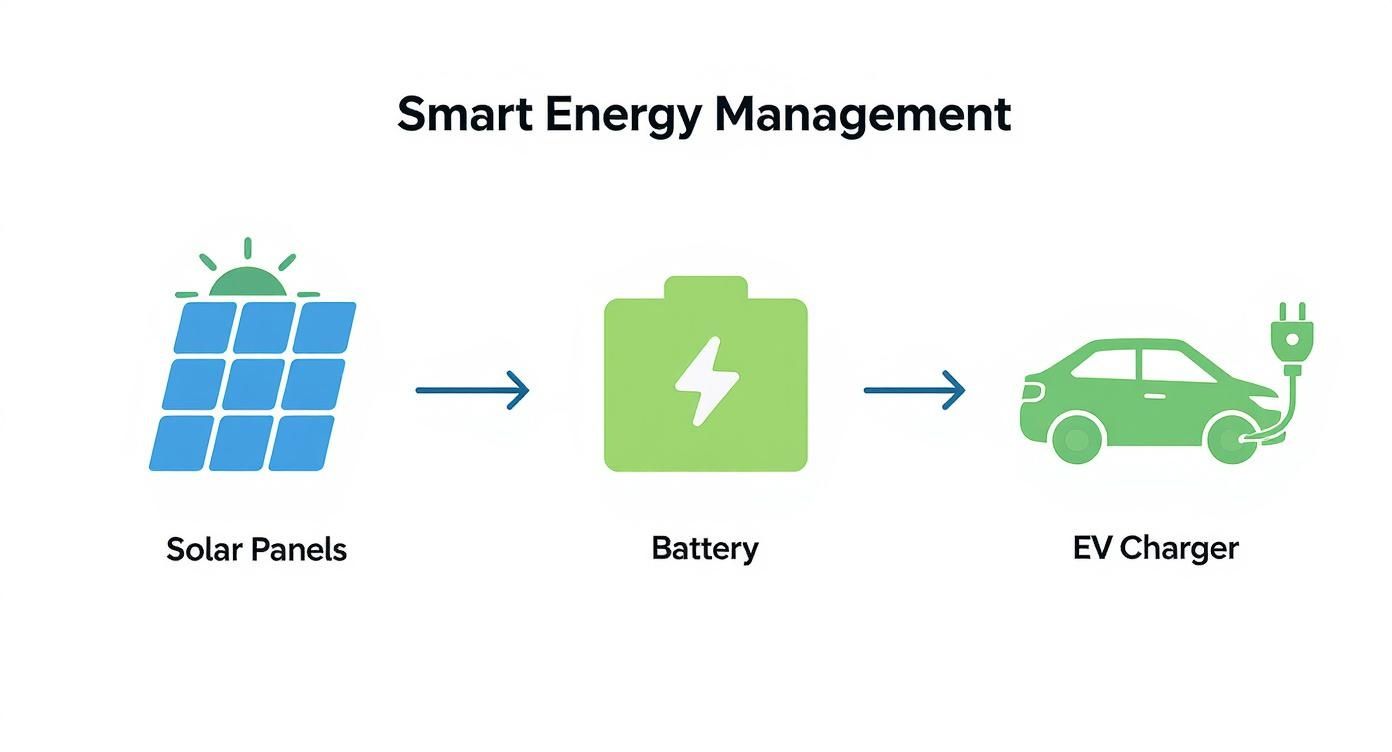
This visual shows the inverter's central role in directing power where it is needed most, making sure every drop of clean energy from on-site renewables is captured, stored and deployed efficiently.
Essential Grid Support Services
Beyond just creating a stable signal, advanced inverter drive systems offer a whole suite of services that actively support the grid's health. These are often called ancillary services and they are becoming indispensable for grid operators.
Key grid support services include:
- Reactive Power Support: This helps maintain steady voltage levels across the network. Inverters can inject or absorb reactive power to prevent voltage sags or swells, which is especially important in areas with high rapid EV charging demand.
- Fault Ride-Through (FRT): If a fault like a short circuit occurs on the grid, inverters with FRT can stay connected and support the grid during the disturbance. This helps it recover quickly instead of tripping offline and making the problem even worse.
- Synthetic Inertia: This is a clever function where the inverter uses the energy in a grid-scale battery to rapidly inject power, counteracting sudden frequency drops and digitally recreating the stabilising effect of a traditional spinning turbine.
These services are becoming central to the UK’s energy strategy. By integrating these advanced functions, inverter-based distributed energy resources like grid-scale batteries and EV charging hubs are no longer just passive loads—they are active grid assets. To explore this further, you might be interested in how ZPN's energy solutions support grid stability and resilience. This intelligent technology is the key to building the flexible, secure and future-proof energy system our country needs.
How to Select the Right Inverter Drive System
Choosing an inverter is not just a technical purchase; it is a critical investment that shapes the performance and profitability of your entire energy project. Getting it right goes far beyond simply matching a power rating. It’s about a careful assessment of performance, compliance and future needs to ensure your system delivers real value for years to come.
This is especially true when you are juggling the demands of rapid EV charging with on-site renewables and battery storage. You need a holistic approach. Making the right choice from the start helps you avoid the operational headaches of an undersized system or the wasted capital of an oversized one. It is all about finding that perfect balance for your specific setup.
Key Selection Criteria
When you are evaluating inverter drive systems for a rapid EV charging hub or a grid-scale battery project, a few technical factors should be at the top of your list. These criteria directly impact the system's efficiency, reliability and long-term viability.
Here’s what to focus on:
- Efficiency Curves: Do not be fooled by the peak efficiency rating alone. You need to analyse the inverter's efficiency curve across its entire operational range. Your system will rarely run at full throttle, so a unit that is highly efficient at partial loads will deliver far better real-world performance and lower your running costs.
- Thermal Management: High-power conversion creates a lot of heat and that heat is the enemy of performance and longevity. A robust thermal management system—whether using active air or liquid cooling—is absolutely vital, especially in demanding applications like rapid EV charging where the hardware is constantly under stress.
- UK Grid Code Compliance: This is non-negotiable. The inverter must be certified to meet all relevant UK grid codes, particularly G99 for systems connecting in parallel to the grid. This ensures your site can connect safely and provide essential grid support functions without any regulatory hurdles.
Sizing Your System Correctly
Sizing an inverter properly is a delicate balancing act. It demands a deep dive into your site’s peak electrical loads, the total capacity of your battery storage and the output of any on-site generation like solar panels.
The goal is to specify an inverter that can comfortably handle the simultaneous demands of rapid EV charging while intelligently managing the energy flowing from your battery and renewables.
A common mistake is sizing an inverter based only on the peak output of a solar array or the maximum charge rate of the EVs. The right approach is to look at the entire distributed energy ecosystem. You need to ensure the inverter can handle worst-case scenarios, like charging multiple EVs on a cloudy day from a constrained grid connection, by drawing seamlessly from both the battery and the grid.
Future-Proofing Your Investment
Your energy needs today probably will not be your energy needs tomorrow. That is why the modularity of the inverter drive system is such a key consideration.
Choosing a modular design means you can easily scale up your capacity in the future. Just add more inverter units instead of ripping out and replacing the entire system. This protects your initial investment and gives you a clear, cost-effective path for expansion.
Just as important are the system's communication protocols. Make sure the inverter supports open standards like Modbus or OCPP . This allows for seamless integration with wider energy management platforms, enabling smart controls, remote monitoring and participation in future energy markets.
The growth in this sector is substantial. For example, the UK solar inverter market was valued at around USD 860 million in 2024 and is forecast to hit USD 1.55 billion by 2035. This rapid expansion underlines the importance of choosing interoperable and forward-thinking technology. You can learn more about the UK solar inverter market and its drivers to see where the industry is heading.
Got Questions About Inverter Drive Systems?
When you are planning a major energy project, the technical details matter. Integrating EV charging, battery storage and renewables brings up a lot of questions and getting clear answers is essential before you commit. We see the same queries come up time and again, so we have put together some straight answers to help you make the right decisions.
This is not about jargon. It’s about tackling the real-world challenges you are likely to face, from constrained grid connections to choosing the right hardware for a busy commercial site.
How Can Inverter Drives Handle EV Charging With a Constrained Grid Connection?
This is where smart inverter drive systems really shine. For sites with limited grid capacity, they are the go-to solution, acting as intelligent gatekeepers for electricity flow. This completely sidesteps the need for costly and time-consuming infrastructure upgrades from the local network operator.
The inverter cleverly juggles multiple power sources to get the job done. During peak times, it can pull from an on-site battery to ease the load on the grid—a technique called peak shaving. It also prioritises any power coming from on-site renewables like solar panels, making sure you use your own clean energy first before ever touching the grid.
By actively managing the flow of power, the inverter ensures the constrained grid connection is never overwhelmed. This unlocks the potential to install powerful, rapid EV charging infrastructure in places that were previously written off, turning a grid constraint into a solved problem.
String vs. Central Inverters: What's the Best Choice for an EV Charging Hub?
For any commercial EV charging hub that relies on on-site renewables and battery storage, the type of inverter you choose is a massive decision that directly impacts reliability.
- A central inverter is one big, single unit that processes all the power for the entire system. Think of it as the central brain.
- A string inverter is a smaller unit that handles the power from a specific 'string' of solar panels or a bank of battery modules.
By using multiple string inverters, you create a more resilient, decentralised system. If one unit goes offline, the rest of the hub keeps running without a hitch. This modular setup is almost always the preferred choice for its reliability and ability to optimise performance, especially when dealing with variables like partial shading on solar arrays.
Are Grid-Forming Inverters a Legal Must-Have in the UK?
While you will not find a blanket legal requirement for every single installation to have grid-forming capabilities just yet, it is fast becoming the standard for larger projects. The regulations are catching up to the reality that the UK's grid is increasingly reliant on inverter-based resources like grid-scale batteries and renewables.
Any project that plans to offer ancillary services back to the grid, like frequency response, must use inverters that meet the technical specifications laid out in standards like the National Grid ESO Grid Code. The direction of travel is clear: intelligent, grid-supporting technologies are no longer optional—they are the future.
For robust, battery-backed EV charging and energy storage solutions designed to overcome grid constraints and future-proof your investment, explore what ZPN Energy can offer. We provide fully integrated systems with patented technology to deliver unparalleled performance and reliability. Learn more at https://www.zpnenergy.com.