Energy Management for Businesses: A UK Guide to Efficiency
Fed up with staring at another unpredictable energy bill? It's time to stop just paying for power and start actively managing it. For any modern business, smart energy management is no longer a nice-to-have; it's a core strategic advantage that can turn your biggest operational cost into a powerful, controllable asset.
Rethinking Your Business Energy Strategy
The traditional way of buying energy is a one-way street: you use power from the grid and pay whatever the supplier decides to charge. This leaves your business exposed to sudden price spikes, grid instability and the ever-growing pressure to decarbonise.
Modern energy management flips this old model on its head. It puts you in the driver's seat.
This new approach is about creating a proactive strategy where you generate, store and intelligently use power right on your own site. The result is a resilient, cost-effective energy ecosystem built around what your operations actually need.
Moving Beyond Simple Consumption
The central idea here is to get different technologies working together in harmony. Think of it like your business is running its own miniature power grid. This system doesn't just pull energy from the national grid; it actively participates in the wider energy market.
So, what are the key pieces of this puzzle?
- On-site Renewables: Solar panels are the most common, generating clean, free electricity during the day and immediately cutting your dependence on the grid.
- Grid-Scale Batteries: These are game-changers. They capture that excess solar power or cheap off-peak electricity, letting you use it when prices are highest or when the grid goes down.
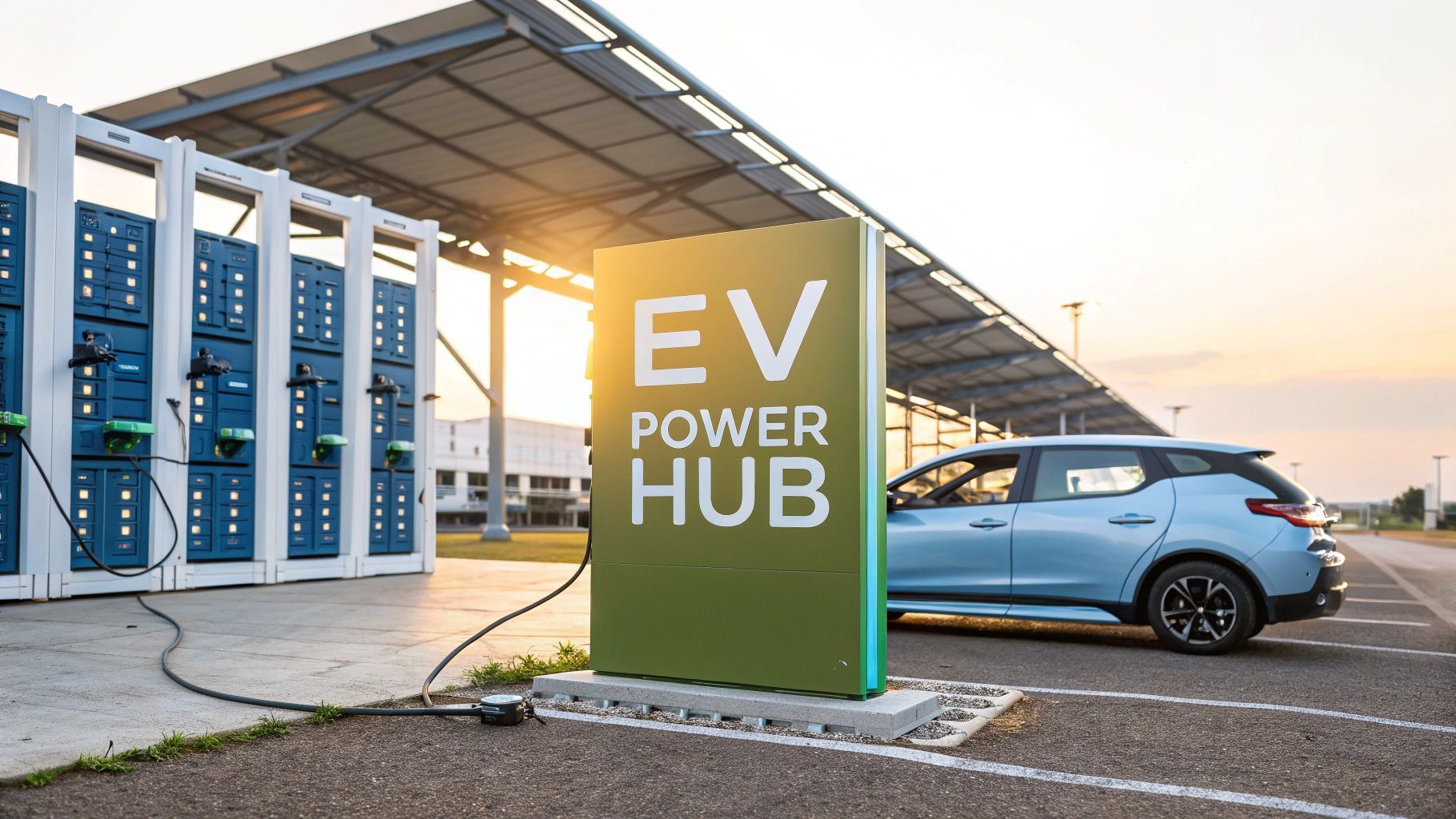
- Intelligent EV Charging: This isn't just about plugging in cars. We're talking rapid EV charging and even mobile EV charging solutions, all managed by smart software to make sure your vehicle fleets are always ready to go without overwhelming a constrained grid connection.
- Distributed Energy: This concept brings everything together. It's a localised network that can operate on its own or with the main grid, giving you an incredible amount of flexibility.
The Strategic Shift from Cost to Asset
When you integrate these elements, you fundamentally change your relationship with energy. It stops being just an unavoidable expense on your balance sheet.
Instead, it becomes a dynamic asset that builds resilience, opens up new ways to generate revenue and gives you a clear competitive edge. A great starting point is to consider some practical steps for boosting energy efficiency in commercial buildings , as this can dramatically improve your overall energy profile from day one.
By actively managing your energy, you turn a sunk cost into a strategic advantage. This shift allows you to navigate the modern energy landscape, turning challenges like grid constraints and price volatility into opportunities for growth and innovation.
The Building Blocks of a Modern Energy System
To truly take control of your energy, you need to understand the individual technologies that make up a modern, resilient system. It's less a collection of separate parts and more like a well-coordinated team. Each player has a specific role but they work in synergy with the others.
This coordinated approach is the core of effective energy management for businesses . The aim is to create a robust, largely self-sufficient ecosystem that puts you in control of your energy destiny—even if your site is hampered by a constrained grid connection. Let's demystify the key components that power this shift.
This concept map shows how a central energy management strategy delivers resilience, new revenue and a competitive edge for your business.
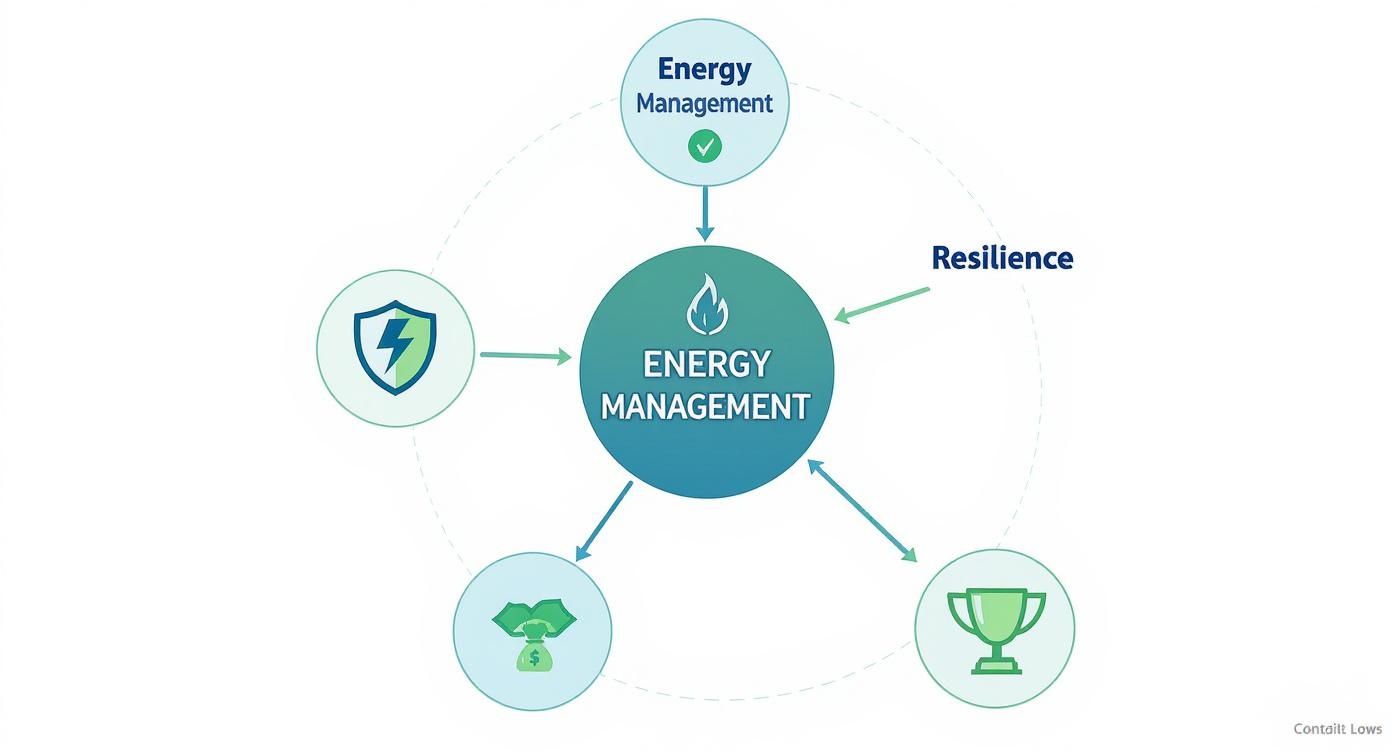
As you can see, these aren't isolated outcomes. They are the interconnected results of a single, unified strategy. This synergy is what turns your on-site energy hardware from a simple cost centre into a powerful business asset.
On-Site Renewables and Grid-Scale Batteries
For most businesses, the foundation of energy independence starts with generating your own power. Solar panels are the most common choice for commercial properties, acting as your primary daytime power source. They produce clean, zero-cost electricity right where you need it, which immediately cuts your reliance on expensive grid power.
But solar generation alone is only half the story. The real game-changer is adding a battery energy storage system (BESS) , often called a grid-scale battery.
A BESS is your private energy bank. It captures surplus solar power generated during the day or draws cheap electricity from the grid during off-peak hours, storing it for when you need it most.
This stored energy can be deployed during periods of high demand to avoid costly peak tariffs. Or it can provide seamless backup power during a grid outage, ensuring your critical operations continue without a hitch. You can explore a deep dive into how commercial solar and battery storage can power your business and support fleet electrification. This combination of generation and storage is fundamental.
Intelligent EV Charging Infrastructure
The rapid switch to electric vehicles presents a massive opportunity but also a big challenge. A fleet of EVs represents a huge new electrical load that can easily overwhelm a site's existing grid connection, forcing costly and time-consuming upgrades. Intelligent EV charging infrastructure is the answer.
This infrastructure is much more than just sockets on a wall. It’s a sophisticated combination of hardware and software designed to manage vehicle charging dynamically.
- Rapid EV Charging: These units deliver high-power charging to get vehicles back on the road fast—essential for commercial fleets and public charging hubs.
- Mobile EV Charging: For ultimate flexibility, mobile chargers can be deployed wherever needed, serving vehicles in remote parts of a site or providing a temporary boost during peak events.
- Smart Energy Management Software: This is the brain of the operation. The software constantly monitors the site's total energy use, the battery's charge level and solar generation to ensure the EV chargers never pull more power than the grid connection can safely handle.
By integrating EV charging with your on-site battery and solar, you can power your fleet with your own clean energy. This orchestrated approach of combining renewables, EV charging and batteries allows you to deploy a significant number of chargers, even on a weak grid connection, without risking instability or racking up huge utility fees. The system intelligently balances power, making sure vehicles are charged efficiently while your entire operation runs smoothly.
From Cost Centre to Profit Centre
Imagine turning your electricity meter into a revenue stream. An advanced energy strategy does more than just trim your bills; it unlocks real, tangible ways to generate income. This all starts with a change in mindset—seeing your on-site energy assets not as operational overheads but as active players in the UK's dynamic energy market.
Slashing operational costs is the first, most immediate financial win. When you generate your own power with solar and store it in batteries, you dramatically reduce your reliance on expensive grid electricity. This is especially true during peak demand periods when tariffs are at their highest. Gaining this strategic energy independence acts as a powerful shield against market volatility.
The pressure to get these costs under control is only getting more intense. In a recent year, UK businesses cut their energy consumption by about 15% yet for many, energy bills still make up 10–15% of total operational costs. That's a huge jump from the pre-crisis average of 3–5% . You can learn more about how UK businesses are tackling rising energy costs and find more insights in recent business energy statistics.

Unlocking New Revenue with Grid Services
The real game-changer, however, is creating entirely new income streams. Your on-site assets, particularly grid-scale batteries, are incredibly valuable to the National Grid, which is in a constant battle to balance electricity supply and demand across the country. By participating in grid-balancing services, you can effectively sell your system's flexibility back to the grid.
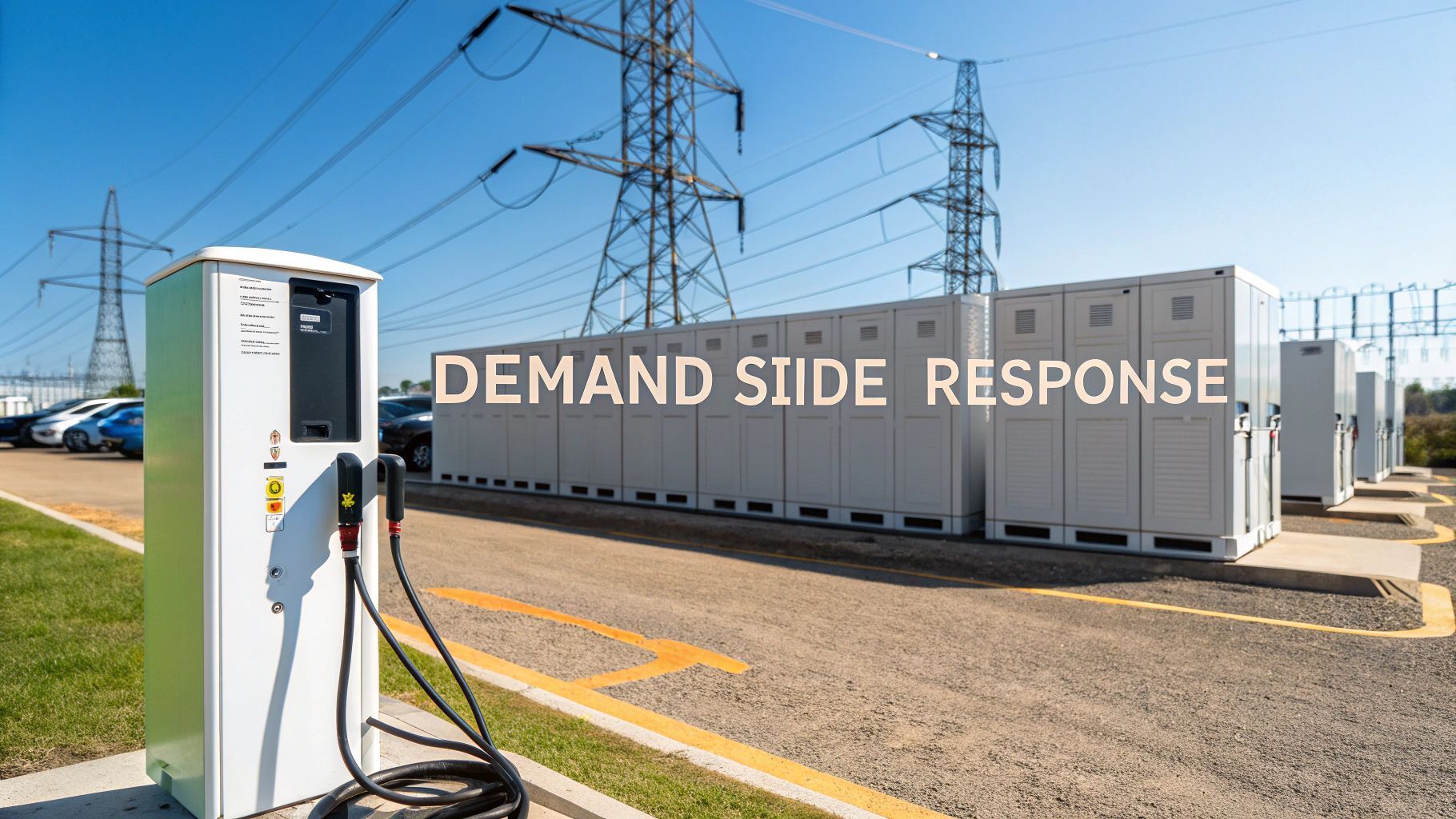
The most common way to do this is through Demand Side Response (DSR) programmes.
Demand Side Response allows you to get paid for helping to stabilise the grid. When national electricity demand spikes, the grid operator can pay you to either reduce your site's consumption or discharge stored power from your battery back into the grid.
This creates a reliable, predictable revenue stream from an asset you already own. To make it simple, an energy aggregator—a specialist company that works with the grid operator—manages the process for you. They bundle your site's flexibility with others to create a larger "virtual power plant" and share the resulting income with you.
Capitalising on the EV Revolution
Another major revenue opportunity lies with EV charging . The switch to electric vehicles is gathering pace and businesses are perfectly positioned to meet the growing demand for public and private charging infrastructure. By installing rapid EV charging points, you create a valuable amenity that also generates direct income.
Just think about these scenarios:
- Retail Parks and Supermarkets: Offer paid rapid EV charging to attract and keep customers. Shoppers can top up their vehicles while they're on-site, which often leads to them staying longer and spending more.
- Logistics Hubs: After electrifying your own fleet, you can sell charging services to other commercial operators or logistics partners, turning your depot into a refuelling hub for the area.
- Office Buildings: Provide paid charging for employees and visitors. This can be offered as a premium perk or a public service, generating revenue from previously unused car park spaces.
This strategy becomes even more powerful when you combine it with on-site renewables and battery storage. You can power your chargers with low-cost, self-generated solar energy, maximising your profit margins on every charging session. What's more, a system combining renewables, EV charging and batteries can be deployed even where there are constrained grid connections, helping you bypass the need for expensive and slow grid upgrades.
The table below shows how different businesses can tap into these benefits, turning energy management from a necessary cost into a strategic advantage.
Energy Management Benefits by Business Type
| Business Type | Primary Cost Saving | Key Resilience Benefit | Main Revenue Opportunity |
|---|---|---|---|
| Logistics Fleet Operator | Reducing depot charging costs with solar and off-peak energy storage. | Ensuring fleet readiness during local power outages. | Selling charging services to other local fleets or the public. |
| Retail Park / Supermarket | Lowering electricity bills by using solar power for store operations. | Maintaining operations (lights, tills, refrigeration) during grid failures. | Earning income from public rapid EV charging stations. |
| Commercial Office Building | Cutting peak demand charges by using stored battery power. | Providing backup power for critical IT systems and business continuity. | Generating revenue from employee and visitor EV charging. |
| Grid-Scale Energy Project | Optimising energy arbitrage (buying low, selling high) with battery storage. | Providing grid stability and preventing blackouts in the local area. | Participating in National Grid services like DSR and frequency response. |
Ultimately, a distributed energy approach turns your entire site into a profit-generating energy hub, opening up income streams that simply didn't exist a decade ago.
Deploying EV Charging on a Constrained Grid
The electric vehicle revolution is here but for many UK businesses, a major roadblock stands in the way of electrifying their fleets. You’re ready to install rapid EV charging but your site's connection to the National Grid just can't handle the extra load. This is a common and frustrating problem known as a constrained grid connection .
Facing a constrained grid often leaves you with two bad choices. You can either accept a long, unpredictable wait for the local Distribution Network Operator (DNO) to upgrade your connection. Or you can pay the eye-watering costs for the upgrade yourself, which can easily run into hundreds of thousands of pounds.
Thankfully, there’s a third, much smarter option.
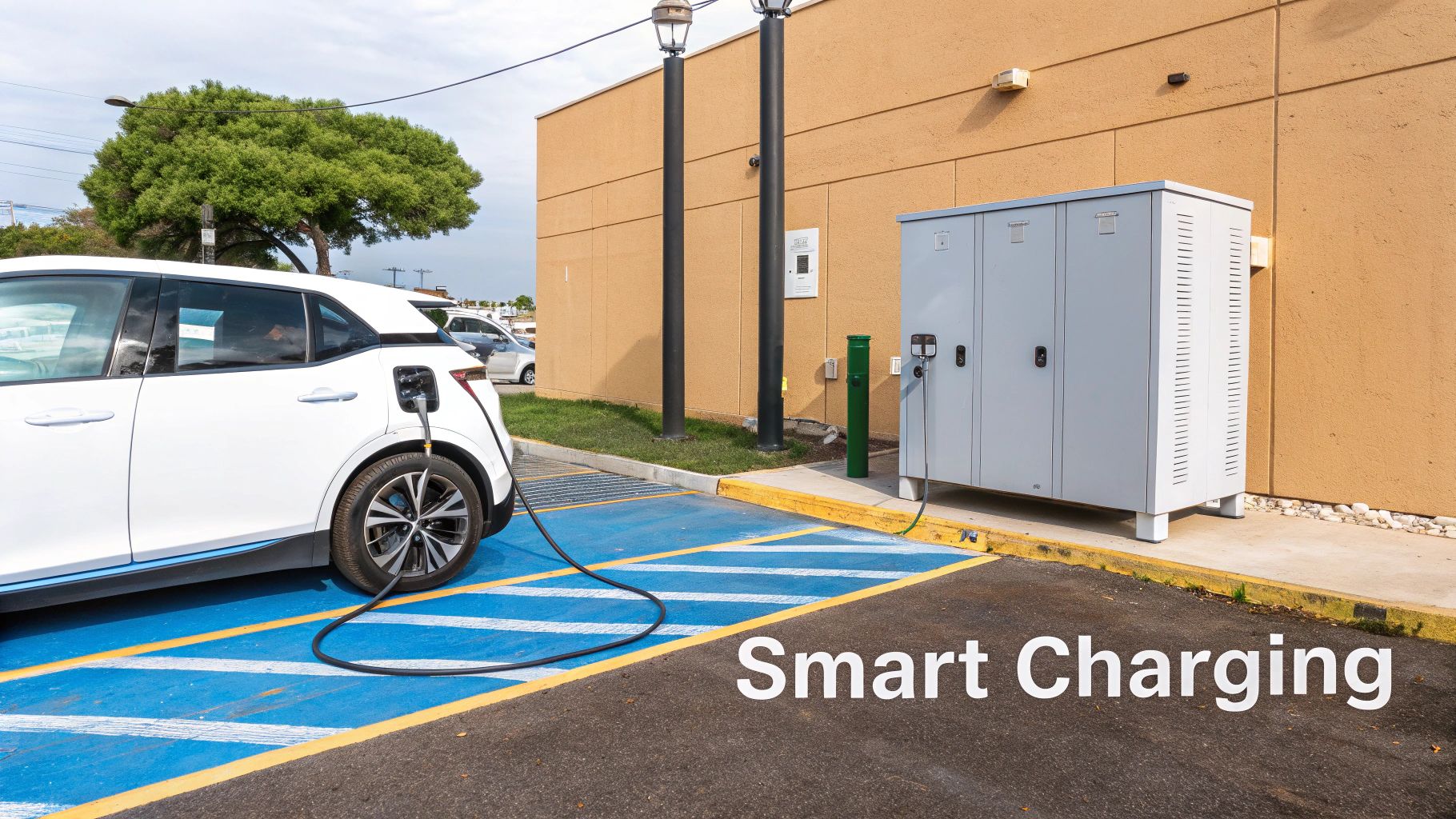
The solution is to create your own on-site energy ecosystem, a core principle of modern energy management for businesses . Instead of depending entirely on a weak grid connection, you generate, store and intelligently distribute your own power right where you need it.
Creating an On-Site Energy Ecosystem
This approach cleverly combines several key technologies to work around grid limitations. By integrating on-site renewables like solar panels with grid-scale batteries , you build a powerful and self-sufficient energy hub on your own premises.
Here’s a look at how these pieces work together to power your EV fleet:
- Solar Generation: Your solar panels produce clean, zero-cost electricity all day. This power can charge vehicles directly, meaning you might not need to pull from the grid at all during sunny periods.
- Battery Energy Storage: Think of a battery as your site's energy reservoir. It captures and stores any excess solar power that isn't used immediately. It can also be programmed to top up with cheap, off-peak grid electricity overnight, ready for the morning rush.
- Intelligent Power Distribution: When your EV fleet needs a charge, the system automatically draws from the stored energy in the battery first. Only when the battery is depleted will it turn to the grid as a last resort, making sure you never exceed your connection's maximum capacity.
This powerful combination of EV charging and batteries effectively creates a buffer between your charge points and the constrained grid. You get all the power you need, exactly when you need it, without ever having to worry about tripping the main breaker or facing massive grid upgrade fees.
The Brains Behind the Operation: Smart Charging
Of course, the hardware alone isn't enough. The real magic happens in the software that manages this whole energy network. This is where smart charging, often called dynamic load management, comes in—it’s the intelligent system that orchestrates everything.
Smart charging software acts like an energy traffic controller for your site. It constantly monitors your building's total power use, the output from your solar panels and the battery's state of charge. Based on this live data, it makes real-time decisions about how and when to charge your electric vehicles.
This intelligent oversight guarantees that your site's total power demand never spikes beyond the grid's limit. For example, if your factory machinery suddenly powers up, the software might momentarily pause EV charging to prioritise critical operations. Once that peak demand passes, it automatically resumes charging. We dive deeper into this sophisticated balancing act in our guide to dynamic power management for EV charging.
Adding Flexibility with Mobile EV Charging
For even greater operational agility, mobile EV charging offers another effective way to tackle specific challenges. These units are essentially high-powered batteries on wheels, capable of delivering a rapid charge wherever it's needed most on your site.
Mobile chargers are perfect for:
- Peak Times: Deploy them during your busiest periods to supplement fixed chargers without adding permanent strain to your grid connection.
- Remote Areas: Use them to service vehicles parked in far-flung corners of a large depot or logistics hub where installing fixed infrastructure just isn't practical.
- Temporary Demand: They provide an ideal solution for special events or seasonal peaks in vehicle usage, offering charging capacity that you can scale up or down as required.
By combining on-site generation, battery storage and smart software, businesses can confidently deploy the EV charging infrastructure they need. This integrated approach to energy management overcomes grid constraints, gets rid of costly delays and turns a potential obstacle into a real strategic advantage.
Your Step-by-Step Implementation Plan
Ready to take control of your energy? Moving from an idea on paper to a fully operational system needs a clear, structured game plan. We've found a practical, four-phase roadmap is the best way to demystify the entire process, giving you the confidence to manage your project from start to finish and turn a strategic vision into a tangible asset.
This structured plan is essential for any business serious about energy management . It makes sure every decision is informed, every piece of kit is correctly specified and the final system actually delivers on its promise of cost savings, resilience and new revenue.
Phase 1: Assessment and Scoping
First things first, you need a detailed picture of your energy landscape. You can't manage what you don't measure. This phase means a thorough audit of your current electricity usage, pinpointing when you use the most power and exactly what it's costing you.
This assessment will lay bare your peak demand periods, your baseline consumption and any specific operational weak spots you need to fix. With this data in hand, you can set clear, measurable goals. Do you want to slash energy bills by 30% , guarantee zero downtime for critical operations or build out the infrastructure to support a fleet of 50 new electric vehicles?
The current market volatility makes this planning stage more critical than ever. The UK business energy market was recently valued at approximately £106 million , a staggering 72.3% increase over twelve years. With around 34% of UK businesses pointing to technology adoption as a driver for increased consumption, having a clear plan is vital.
Phase 2: Design and Procurement
With your goals locked in, you can move on to designing the right system. This is where you translate your needs into a technical specification, selecting the right mix of solar, battery storage and EV charging hardware for your site.
This stage involves several key questions:
- Solar Capacity: How many panels do you actually need to meet your daytime demand and keep your batteries topped up?
- Battery Sizing: What size of battery is required to shave those expensive peak loads or provide backup power for as long as you need?
- EV Charging Needs: Will you need a handful of rapid EV charging points for quick turnarounds or a larger network of slower chargers for an overnight fleet?
During this phase, it’s also crucial to research all the available incentives and support. As you map out your implementation plan, look into programmes that can offset upfront costs and speed up your return on investment. For instance, some businesses can unlock energy savings through programs like the Enbridge Gas Direct Install Program.
Phase 3: Installation and Integration
Once the hardware is on-site, the practical work of installation begins. This phase is about much more than just bolting panels to a roof and wiring up batteries. It’s about the careful, seamless integration of each component into a single, cohesive system.
This involves connecting your new assets to your site's existing electrical infrastructure and installing the smart management software that will act as the system's brain. A smooth integration ensures that your solar panels, batteries and EV chargers are all talking to each other and your building's operational controls.
A successful installation is one that causes minimal disruption to your daily operations while ensuring every component is commissioned to perform optimally from day one. This meticulous integration is the key to unlocking the full potential of your energy assets.
Phase 4: Optimisation and Management
Your energy system is now live but the job isn't done. The final phase is a continuous loop of monitoring, optimising and managing performance. Using real-world data from your energy management software, you can fine-tune the system to squeeze every last drop of value from your investment.
This ongoing management allows you to adapt to changing conditions on the fly. You can adjust your battery's charging schedule to take advantage of new grid tariffs or modify your EV charging strategy based on actual fleet usage patterns. This data-driven approach ensures your system evolves with your business, continuously delivering value long after the installers have packed up and left.
Measuring Success and Proving ROI
An investment in advanced energy infrastructure is only as good as its measurable return. To get stakeholders on board and build a compelling business case, you need to move beyond abstract benefits and focus on solid, concrete data.
Proving the value of your project means tracking the right Key Performance Indicators (KPIs) from day one. This is where a modern energy management system really shines. It gives you clear, real-time dashboards that turn complex operational data into actionable financial insights, making it easy to show the project's success to everyone from the finance team to the boardroom.
Key Performance Indicators to Track
To build a complete picture of your return on investment (ROI), you need a balanced set of metrics covering cost savings, operational efficiency and new revenue. These KPIs provide the hard evidence needed to justify the initial outlay and any future investments.
A good place to start is by tracking these essentials:
- Pounds Saved on Energy Bills: This is the most direct metric. Compare your current energy costs against historical bills to show the immediate impact of your on-site generation and battery storage.
- Carbon Reduction (tCO2e): Quantify your carbon footprint reduction in tonnes of CO2 equivalent. This is vital for sustainability reporting and hitting corporate environmental goals.
- Grid Service Revenue: If you’re participating in programmes like Demand Side Response, track the income you generate each month from selling your battery's flexibility back to the grid.
- EV Charging Revenue: Monitor the direct income from your public or private EV chargers. This demonstrates a clear and immediate return from this new asset.
Proving ROI isn't just about a single saving; it's about telling a complete financial story. By combining cost avoidance, carbon reduction and new revenue streams, you can demonstrate the comprehensive value that a smart energy strategy delivers to the business.
Calculating Your Payback Period
Once you have these KPIs, working out the payback period for your assets is straightforward. The formula is simple: divide the total initial investment by the total annual savings and revenue generated. The result is the number of years it will take for the system to pay for itself.
This calculation is the cornerstone of your business case, proving not only immediate savings but also the long-term financial benefits of energy independence. This is especially relevant as UK industrial energy consumption continues to fall, recently hitting 19.5 million tonnes of oil equivalent (mtoe) —its lowest level in over five decades. This trend highlights a major industrial shift towards efficiency, making data-driven energy projects more crucial than ever. You can explore more on this long-term trend in the government's latest UK energy consumption statistics.
Effective measurement is the final, critical step in your energy management journey. Accurate tracking doesn't just prove the value of your investment; it also provides the insights needed for continuous optimisation. For a deeper look into the tools that make this possible, check out our guide to industrial energy monitoring systems.
Frequently Asked Questions
When you start digging into advanced energy management, a lot of questions pop up. It’s a new landscape for many businesses, blending renewables, batteries and EV charging into one cohesive strategy. Here are some straightforward answers to the questions we hear most often.
Can We Really Install EV Chargers on a Limited Grid Connection?
Yes, absolutely. This is one of the most common hurdles businesses face and it's precisely the problem a modern, integrated energy system is built to solve. The trick is to stop thinking of the grid as your only source of power.
By pairing on-site solar generation with a battery energy storage system (BESS) , you’re essentially creating your own private power reserve. This lets you power your EV chargers without ever threatening to overload your existing grid connection. The system is smart enough to use stored solar power or cheap off-peak energy first, which dramatically cuts the strain on the grid. It means you can roll out large-scale, rapid EV charging without getting stuck in the queue for costly and slow grid upgrades.
What Is the Realistic Payback Period for Solar and Batteries?
The return on investment for commercial solar and battery systems can vary but most UK businesses find they break even within 5 to 10 years . It’s not a single calculation, though; the different parts of the system contribute in their own way.
Solar panels often pay for themselves surprisingly quickly, sometimes in as little as 4-6 years, purely through the savings on your electricity bills. Adding a battery might extend that initial payback period slightly but it unlocks a whole new level of value through three key functions:
- Peak Shaving: Using your stored energy to deliberately avoid the most expensive grid tariffs.
- Grid Services: Actively generating revenue by selling your stored energy and flexibility back to the grid.
- Backup Power: Keeping your operations running smoothly during a power cut.
These benefits don't just reduce costs; they create income and resilience, which significantly accelerates the overall ROI of the whole system. It becomes a powerful financial asset, not just an operational one.
The payback isn't just about saving money on bills. It's about building a resilient operation and creating new revenue streams that fundamentally change your business's financial model.
How Can a Business Actually Earn Money from Grid Services?
Grid services, often known as Demand Side Response (DSR), are programmes where the National Grid pays businesses to help keep the power network stable. If you have a battery system, you have the exact kind of flexibility the grid operator desperately needs.
Getting started usually means partnering with a licensed energy aggregator. They handle the complex part, managing your battery's participation in the DSR market. They’ll send automated signals to your system, telling it when to discharge stored energy back to the grid or when to reduce your site's consumption during times of national peak demand. In return for that flexibility, you receive a share of the revenue. It effectively turns your energy asset into a reliable—and largely passive—income stream.
Take control of your energy strategy with an integrated solution from ZPN Energy . Discover how our rapid EV charging, battery storage and energy management systems can cut your costs, build resilience and unlock new revenue. Learn more about our advanced solutions.